Types of clean electricity generation
If we’re to switch to alternative forms of electricity generation, we need new technologies to replace coal and gas power stations. There are a number of technologies available, mostly renewable energy. These are so named because their supply is essentially infinite – the world is never going to ‘run out’ of wind. Non-renewable resources have a limited reserve.
Renewables
Onshore wind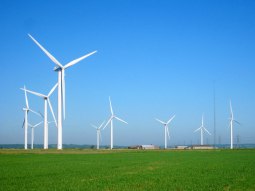
Onshore wind uses large turbines (pictured) to turn an electric generator. Onshore wind costs have plummeted over the years, making it the cheapest form of power. However, in densely populated countries like the UK as lots of turbines near human settlements can lead to complaints of visual impact.
Offshore wind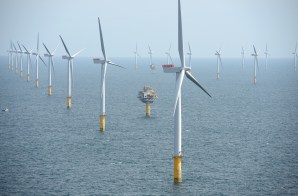
Offshore wind operates in the same way as onshore, and largely removes complaints, as they are often invisible from the coastline. They are also much more efficient than their onshore counterparts, almost twice as much in some cases.
Solar PV
Solar panels are a common sight in the UK, and can be installed in large field arrays or in individual homes. Solar is the most publicly popular energy technology in the UK, has no major visual or pollution issues, and one of the cheapest forms of electricity generation. However, solar is less efficient in the UK than other, sunnier countries.
Hydropower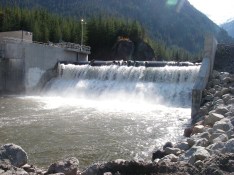
An older technology compared to wind and solar, hydropower is clean, efficient and well proven, but the UK does not have much exploitable resource left, so its future expansion is limited.
Tidal
Tidal power is expensive and experimental, but could be more efficient than other forms of renewable energy. Underwater turbines and lagoons in estuaries are being trialled in the UK, which is a world leader for this technology.
Wave
Wave power is also experimental, but seems to have less potential than tidal due to lower efficiency. It also has to compete with the cheaper equivalent of offshore wind. Nonetheless, experiments on wave energy are ongoing.
Biomass
Biomass technology varies, but essentially is the use of organic matter to generate electricity. The most common form of biomass is the burning of wood pellets to drive turbines, which can be used as back-up when the wind isn’t blowing or the sun shining. However, the environmental costs are high, as not only does there have to be considerable deforestation, but much of the UK’s biomass fuel is imported from the USA, thus lowering the emissions saved by its use.
Geothermal
The ground beneath the earth is warmer than that at the surface, meaning that this heat can be exploited for power. In the UK geothermal power has mostly applications for heating, but it is still a relatively untapped resource.
Non-renewable
Nuclear
Nuclear power splits atoms to generate electricity. While nuclear power stations can run almost constantly, and provide a great deal of power per station, they are unpopular because of past nuclear accidents, radiation contamination, and extremely high costs, which often spiral. Nuclear divides environmentalists and political figures alike, many strongly supportive or opposed. Additionally, current nuclear plans have run into multiple cost and construction problems.
CCS
Carbon capture and storage involves capturing carbon chemically at a gas or coal power station and pumping it back into the ground, removing the emissions from an existing plant. CCS has the potential to provide back-up power for wind and solar, but very few plants are up and running, as due to high capital costs and unforeseen enginering problems, CCS’s global development has been severely delayed.
Hydrogen
Hydrogen is a gas that leaves no harmful emissions when burned, and a fleet of hydrogen power stations could provide dispatchable power alongside or instead of CCS when renewable power generation is low. While hydrogen is clean to burn, it requires either more electricity or CCS to produce, and therefore it is energy intensive to make, and is only as clean as its production method.
Non-generation
Energy storage
Storing energy could be extremely useful for intermittent power like solar, wind, wave and tidal, capturing electricity when there is a surplus and releasing it back when there is high demand. Energy storage technologies are numerous, and many experimental. They include storing water, heat and air in reservoirs and releasing it through turbines in times of need, giant batteries, and other more experimental forms. Large scale battery storage in particular has been very popular in recent years. There is massive potential here for these technologies, but many of these storage technologies are only useful for short and medium demand, with longer term outages of generation requiring other technologies.
Interconnectors
Not all countries are windy or sunny at the same time. If the UK is having a high output from renewables and another country needs power, or vice versa, interconnectors are large subsea and occaisonally overland cables that connect up power grids in and in-between countries. The UK is greatly increasing its stock of these over the 2020s, connecting us better to Ireland, France, Belgium, the Netherlands, Germany, Denmark, Norway and Iceland. Interconnectors offer long term responses to renewable variability, and are relatively cheap to build. However, it may not always been in both countries mutual interest to exchange electricity at the same time, and imported electricity can sometimes undercut electricity generated at home.
Demand Side Response (DSR)
The biggest user of electricity in the UK are homes, but commercial and industrial demand is also high. Incentivising the organisations responsible for this demand to shut down or start up their electricity demand to correlate with high renewable output can offer a fast and cheap way of reducing demand and balancing out renewables. Increasingly, UK homes can also ‘flex’ their demand by turning off high energy appliances at peak times, receiving financial rewards from the grid for doing so. As the UK moves to electrified heat, transport and industry, DSR is likely to become ever more important across multiple sectors.
Energy efficiency/behavioural change
Reducing the amount of electricity we actually demand from its source can often be the cheapest and fastest way of reducing greenhouse gas emissions, and much progress has been made in this area in recent years. Switching to more efficient light bulbs, encouraging consumers to use less energy and remote conferencing are all common examples. However, there is an inherent limit to this approach, as it can only reduce electricity demand, it doesn’t get rid of demand altogether and it doesn’t actually make the electricity any cleaner directly. So there will always be a need to decarbonise the electricity sector even if the amount of electricity used is lower.
 Decarbonise Now