Changing buildings
The UK has relied on cheap gas from the North Sea to heat its buildings for decades. With the need to address climate change alongside volatile costs of the fuel, and reserves of gas in UK territory getting lower, new ways of producing heating for spaces and hot water are needed.
Changing the way buildings are made or kept warm is a starting point for reducing energy used to heat them. The UK has seen a great leap in numbers of homes fitted with loft and/or wall insulation over the last decade. This can bring great benefits very quickly, and is usually highly cost effective when reduced heating bills are taken into account. New buildings could be designed to bring even greater benefits, with low heat demand built in at the outset for maximum comfort for households. However, changing building design alone will be insufficient to decarbonise heating. We also need to electrify our heating through heat pumps and heat networks.
Heat pumps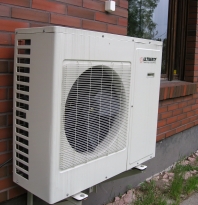
Taking and converting natural heat from the surrounding environment can be a complete alternative to conventional heating systems. A heat pump is a device that does just that, working like the opposite of an air conditioner. Ground source heat pumps use underground heat, while air source heat pumps outside air around buildings. When running off clean electricity from renewables, these produce heating cleaning as well. A drawback to heat pumps at present is the amount of electricity they require, with increased electricity demand if they are rolled out on a large scale. While they can be run more cheaply than a gas boiler in the right circumstances, the upfront costs of heat pumps and professional installation are barriers to their uptake at present.
Heat networks
A more efficient option at a larger scale is to create a heat network. Rather than an individual heat pump for an individual building, heat networks can use industrial scale heat pumps or waste heat from elsewhere (like data centres) and transport that heat in pipes to more than one building. This can range from a street to a whole city. Heat networks work best in areas of concentrated heat demand, lowering the cost for the large network of pipes and connections that need to be laid. Despite this, heat networks are only anticipated to be a partial solution to decarbonising heating in certain areas.
 Decarbonise Now