Transport is currently the largest source of emissions in the UK, and the bulk of this is from road vehicles. Fortunately, there are options for transitioning away from conventional petrol and diesel cars, buses, vans and lorries.
Active travel
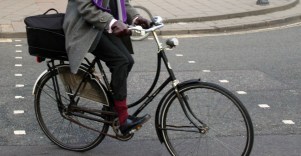
Encouraging people to travel less or more effectively can make significant changes to transport emissions in the short term. Active travel refers to shorter journeys made by walking and cycling. Many car journeys are under 5 miles, and designing urban areas to better allow these shorter journeys to be made on foot or by bicycle or e-bike can provide faster ways of reducing road traffic. These are very unlikely to be anything more than a partial solution to transport decarbonisation. However, these changes can make a prolonged change to society in unexpected positive ways – for example, greater numbers of citizens cycling lead to reduced obesity and related health problems.
 Public transport
Trains take up only 2% of transport emissions alone in the UK as they currently are, yet the railway network is now at its busiest in a century. Buses meanwhile provide vital connections in both busy urban rural areas. Increased coverage of international and intercity trains, urban rapid transit systems, and increased coverage of the UK’s bus network, as well as full electrification of all the above, can both help decarbonise and build in resilience to the country’s transport network.
Electric vehicles
Electric vehicles are the main solution to decarbonising transport however. Even though we need to greatly increase options for travel beyond cars, all future scenarios look set to include roads as the predominant form of travel. Vehicles that run off electricity are zero emission when in use, if combined with reaching clean power from renewables, nuclear, and other forms of low carbon power. The barriers to electric vehicles is the higher cost upfront of the vehicle due to the battery, as well as these batteries resulting in a shorter range than petrol and diesel equivalents. Electric vehicles are already cheaper to run than conventional cars however, and are on track to cheaper upfront towards the end of the decade. A national network of rapid electric charging stations can resolve the so-called ‘range anxiety’ of reduced range from electric cars.
HGVs and hydrogen
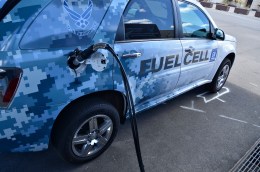
Hydrogen is not likely to be competitive as a transport fuel next to electricity for cars, vans, buses, coaches, and smaller lorries. However, with large vehicles such as HGVs (Heavy Goods Vehicles) which include the largest and heaviest lorries, that often have to travel large distances, the potential for hydrogen becomes more likely. As with hydrogen for electricity generation, much of the environmental benefit of the fuel depends on its production method.
Shipping and aviation
Ships and planes however, are more problematic. For a start, international shipping and flights can cause great problems legally to climate change politicians and law makers, for whose responsibility is it for boats and planes over international waters that no one technically owns? And even for national ships and flights, the technical solutions are more difficult than for road and rail counterparts. Electric vehicles are a possibility, but the range and capabilities of batteries as they currently are isn’t sufficient for many. Hydrogen is also a possibility, and indeed hydrogen boats are now a reality, but there are still the difficulties of setting up large scale hydrogen transport infrastructure. In short, the problems of setting up these alternatives are the same as for rail and road vehicles, but amplified, and as such it may take longer to see low carbon shipping and aviation.
 Decarbonise Now