Welcome to a series of monthly updates from Decarbonise Now!
After being on ICE (as in frozen, not under an Internal Combustion Engine), Decarbonise Now is relaunching its electric vehicle climate campaign. This series will update on the progress of campaigning, the transition to electric transport, and to Net Zero more generally. Decarbonise Now started life as a broader climate campaign, before looking more specifically at the transition to electric cars (and other vehicles). The question is – why EVs? First of all, a bit of context. Decarbonise Now is a volunteer led campaign built with energy expertise gained elsewhere. Which is a loose way of saying – it gets no funding (very deliberately) and is no one’s day job.
Therefore, that’s quite the time constraint, and something more targeted than climate generally was needed. One of the fascinating things about Net Zero is that surface transport (aka road and rail) is easily the UK’s largest emitting sector. Yet, most of the public and politically focus ends up elsewhere, with renewables taking much of the attention, scare stories spreading about heat pumps, and understandable debate around how we eat and use land. That’s not to say EVs aren’t a part of the debate of course, but given the outsized role of transport, this isn’t quite proportionate.
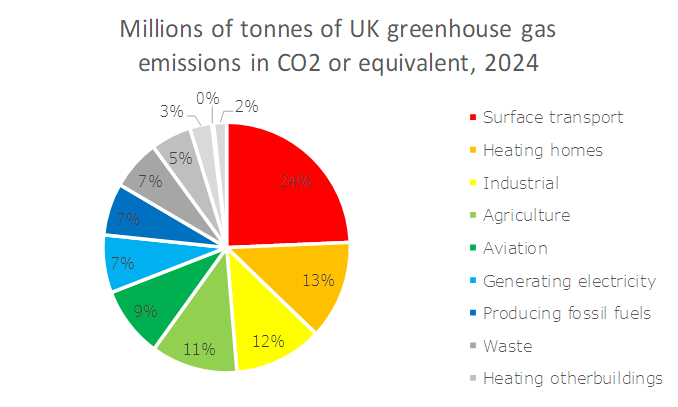
Equally, while Decarbonise Now supports increased walking and cycling and better public transport links, experts such as the Climate Change Committee are clear – the vast bulk of emissions reductions for surface transport will come from the move to electric cars, vans, lorries, buses, coaches and motorbikes. Furthermore, a lot of these cuts in emissions are coming at an earlier point. While cuts to heating, aviation, and land use all play a role in reaching the UK’s Net Zero target, rapid cuts are not expected from any of these. But, as the world has seen from countries further ahead like Norway, the transition to EVs are marked by tipping points, where they go from the upstarts to the mainstream rapidly. Decarbonise Now exists to push along these tipping points through additional insight and advocacy, joining the portfolio of organisations guiding the UK towards an electric future.
So, what’s next? The ultimate question to answer on the above is, how fast can we transition to electric vehicles in the UK? What are the barriers, the enablers, the levels we can pull? Multiple organisations have suggested various parts of this, yet a more comprehensive advocacy piece on ideas to go beyond the standard cycle of car sales has been lacking. Decarbonise Now is producing work to look at innovative solutions to unlocking a faster transition, putting the public’s interest behind the wheel and looking at politically acceptable solutions that are radical, fair, and practicable.
With the unpredictable conflict in Iran so painfully showing, the UK has outsourced its inflation rate and therefore much of its economic growth to international fossil fuel markets, which are disproportionally controlled by autocracies. Regardless of climate concerns, rapid acceleration away from fossil fuels is an economical and security necessity, not a purely environmentalist goal. The UK’s thirst for oil is mostly for surface transport, creating an enormous opportunity in the middle of enormous difficulty. Taking true control of the country’s transport will require adventurous new ideas, and Decarbonise Now is taking its first steps to deliver them.
See you in a month for a progress update!